
Your Complete Monsoon Hair, Skin & Nail Care Guide
The monsoon season brings relief from the heat but also creates unique challenges for your hair, skin, hands, and feet. High humidity, rainwater, pollution, and excess sweat can lead to hair fall, frizz, acne, fungal infections, dull skin, and foot problems. At Edge & Strands Salon, Vadodara, our beauty experts have created this complete guide to help you stay healthy, confident, and beautiful throughout the rainy season.
Monsoon Hair Care
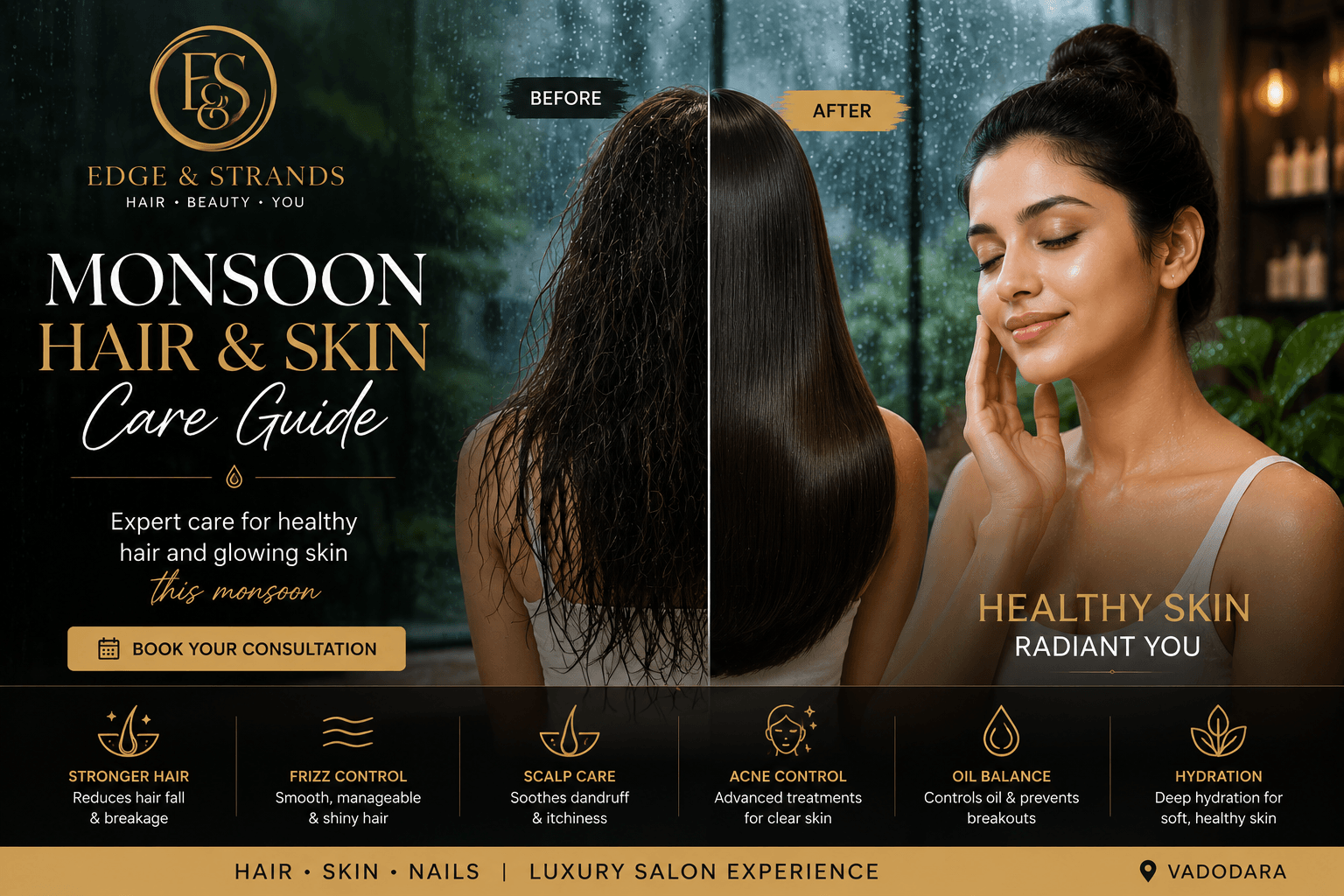
Monsoon humidity can lead to frizz, hair fall, dandruff, oily scalp, and dull-looking hair. Explore our expert answers to the most common hair care questions during the rainy season.
Does hair fall increase during monsoon?
Yes. It is common to notice increased hair fall during the monsoon because high humidity weakens hair roots and excess moisture encourages scalp buildup. Seasonal shedding is normal, but excessive hair fall can often be reduced with proper scalp care, nourishing treatments, and a balanced diet.
Why does my hair become frizzy during monsoon?
Humidity causes the hair cuticle to absorb moisture from the air, making strands swell and appear frizzy. Using sulphate-free shampoos, deep-conditioning treatments, and anti-frizz serums can help keep your hair smooth.
How often should I wash my hair during monsoon?
Washing your hair 2–3 times a week is generally recommended. If your scalp becomes oily quickly or you are exposed to rain or pollution, you may need to wash it more frequently using a mild shampoo.
Is Hair Spa recommended during monsoon?
Absolutely. A professional Hair Spa deeply nourishes your scalp and hair, controls dryness, reduces frizz, and improves overall hair health during the humid season.
Can I get Keratin or Botox treatment during monsoon?
Yes. Keratin and Hair Botox treatments are excellent choices during monsoon because they reduce frizz, improve manageability, and help protect your hair from humidity when maintained properly.
Does rainwater damage coloured hair?
Rainwater itself isn’t usually the main problem, but pollutants and impurities mixed with rain can make coloured hair appear dull. Rinsing your hair with clean water after getting wet and using colour-protecting products helps maintain vib
Why does dandruff increase during monsoon?
Increased humidity and an oily scalp create an ideal environment for dandruff-causing microorganisms. Regular scalp cleansing and professional scalp treatments can help control flakes and itching.
Should I oil my hair during monsoon?
Light oiling before washing can nourish the scalp, but avoid leaving oil on for long periods as it may attract dirt and increase scalp buildup during humid weather.
What should I do if my hair gets wet in the rain?
Rinse your hair with clean water as soon as possible, gently towel dry, and avoid tying it while it’s still wet. This helps reduce scalp irritation and minimizes frizz.
Which salon treatment is best for monsoon hair?
The ideal treatment depends on your hair type. Hair Spa, Scalp Detox, Anti-Frizz Therapy, Keratin, and Hair Botox are among the most popular treatments for maintaining healthy hair during the monsoon. A professional consultation can help determine the best option for your needs.
Need Expert Advice for Your Hair?
Every hair type reacts differently to monsoon weather. Our experienced stylists at Edge & Strands Salon, Vadodara can recommend the right treatment based on your hair and scalp condition.
Monsoon Skin Care
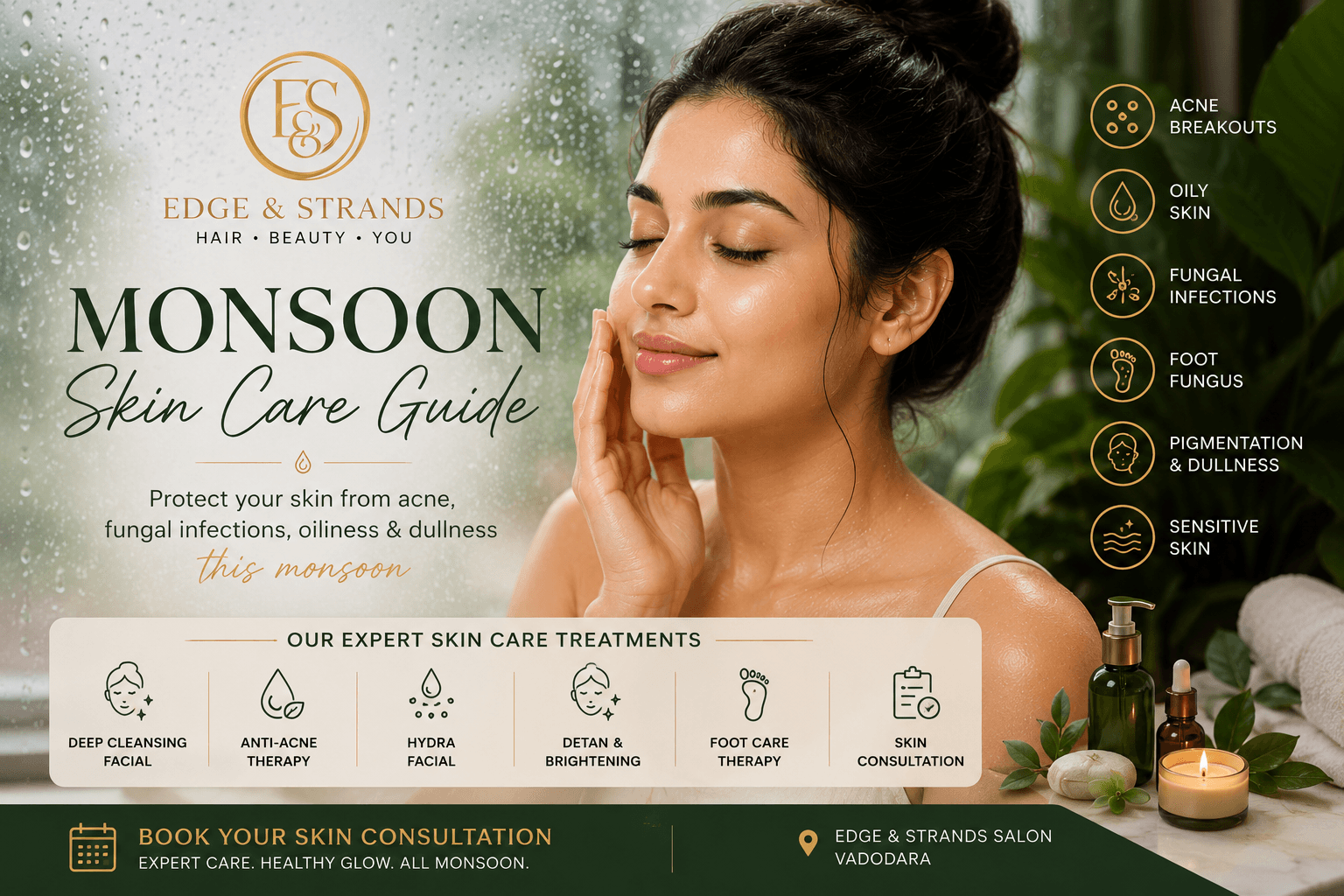
Monsoon weather can cause excess oil production, clogged pores, acne breakouts, fungal infections, and dull-looking skin. Here are expert answers to the most common skin care questions during the rainy season.
Why do pimples increase during monsoon?
Humidity increases oil production and sweat, which can clog pores and encourage bacterial growth. Regular cleansing, non-comedogenic skincare, and professional acne treatments help keep your skin clear.
Should I moisturize my skin during monsoon?
Yes. Even oily skin needs hydration. Choose a lightweight, oil-free moisturizer to maintain your skin barrier without making your face greasy.
Do I still need sunscreen during monsoon?
Absolutely. UV rays penetrate clouds and can still cause pigmentation, tanning, and premature ageing. Apply SPF 30 or higher every day, even on cloudy days.
Which facial is best during monsoon?
Hydrating facials, deep cleansing facials, Hydra Facial, and anti-acne facials are ideal during the monsoon. The right choice depends on your skin type and concerns.
Why does my skin look dull during monsoon?
Humidity, pollution, and dead skin buildup can make your complexion appear tired. Regular exfoliation and professional skin treatments help restore brightness.
Are fungal skin infections common during monsoon?
Yes. Warm, damp conditions create an ideal environment for fungal infections, especially around skin folds. Keeping your skin clean and dry helps reduce the risk.
How often should I get a facial during monsoon?
For most people, one facial every 4–6 weeks helps maintain healthy skin. Those with acne-prone or oily skin may benefit from more frequent professional treatments.
Can monsoon weather worsen pigmentation?
Yes. UV exposure combined with inflammation from acne or irritation can make pigmentation more noticeable. Daily sunscreen and targeted treatments help prevent this.
Give Your Skin the Care It Deserves This Monsoon
Whether you’re dealing with acne, oily skin, dullness, or pigmentation, our skin experts at Edge & Strands Salon, Vadodara can recommend treatments tailored to your skin type.
Monsoon Hand & Foot Care
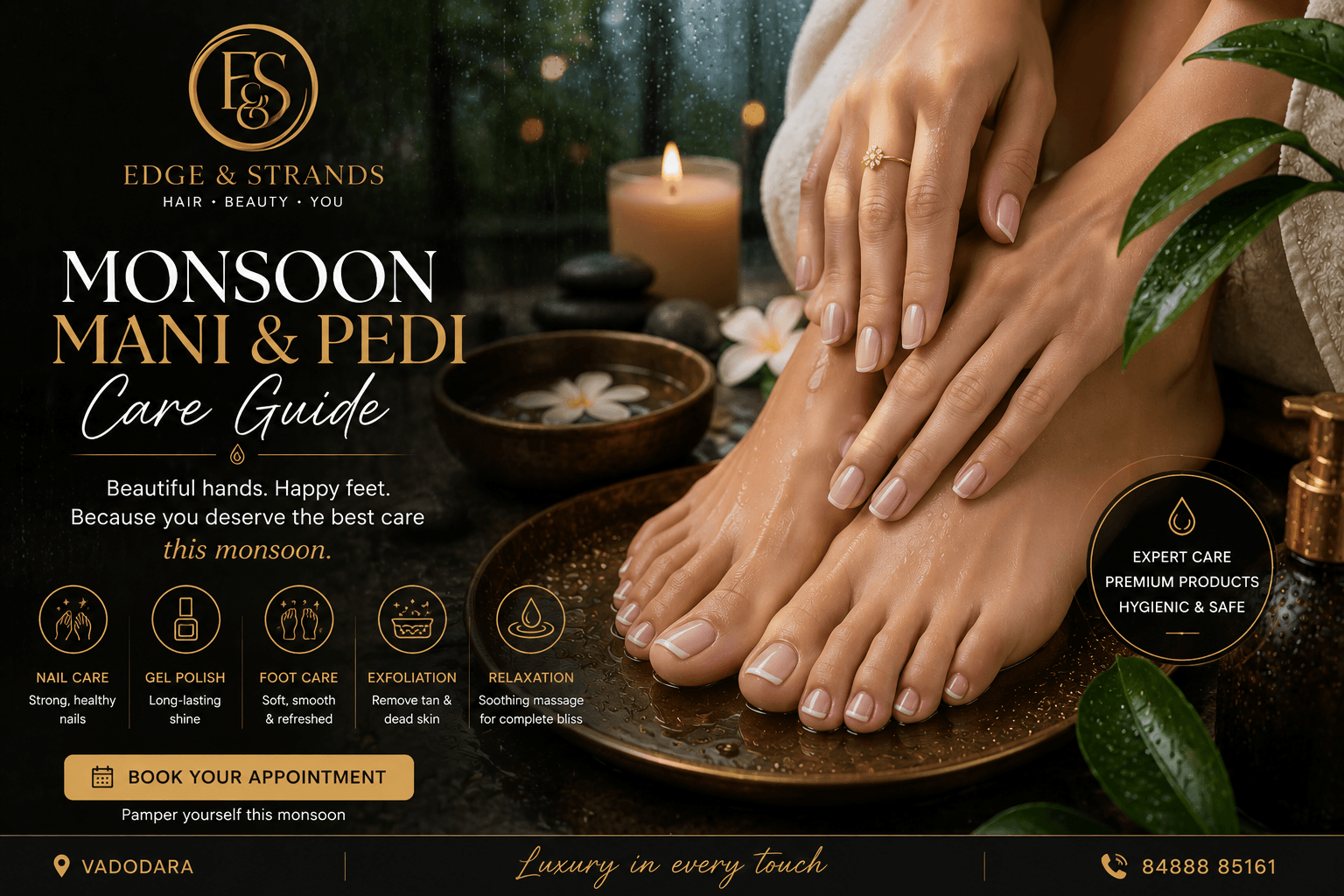
Hands and feet are especially vulnerable during the monsoon due to constant exposure to moisture, closed footwear, and humidity. Proper nail care, regular manicures, and pedicures help prevent fungal infections while keeping your hands and feet healthy, clean, and beautiful.
Why are fungal infections common during monsoon?
Warm, damp conditions caused by rain and closed footwear create the perfect environment for fungal infections. Keeping your feet clean and dry and scheduling regular professional foot care can significantly reduce the risk.
How often should I get a pedicure during monsoon?
A professional pedicure every 3–4 weeks helps remove dead skin, maintain hygiene, improve circulation, and reduce the risk of fungal infections during the rainy season.
Can manicures help protect my nails during monsoon?
Yes. Regular manicures strengthen nails, maintain cuticle health, and help prevent nail breakage caused by constant moisture and frequent hand washing.
How can I prevent foot odour during monsoon?
Always dry your feet thoroughly after washing, wear breathable footwear whenever possible, change socks daily, and schedule regular pedicures to maintain foot hygiene.
Why do my heels crack even during monsoon?
Although humidity is high, walking barefoot on wet surfaces and neglecting moisturization can still lead to dry, cracked heels. Regular exfoliation and nourishing foot creams help keep heels soft.
Is nail fungus treatable?
Early treatment is important. Professional nail care, good hygiene, and proper medical guidance can help prevent fungal infections from becoming more severe.
Should I avoid nail polish during monsoon?
No. However, allowing your nails to breathe occasionally and maintaining proper nail hygiene is recommended. Using high-quality salon products also helps protect your nails.
Why is professional mani-pedi important during monsoon?
Professional manicures and pedicures provide deep cleaning, exfoliation, cuticle care, moisturization, and nail maintenance that help prevent infections while keeping your hands and feet looking their best.
Healthy Hands & Beautiful Feet This Monsoon
Pamper yourself with luxurious manicure and pedicure treatments designed to keep your hands and feet clean, refreshed, and protected throughout the rainy season.
10 Expert Monsoon Beauty Tips
- 🌿 Wash your hair after getting caught in the rain.
- 🌿 Don't tie your hair while it's wet.
- 🌿 Use a lightweight moisturizer every day.
- 🌿 Apply sunscreen, even on cloudy days.
- 🌿 Keep your scalp clean to reduce dandruff.
- 🌿 Dry your feet thoroughly after washing.
- 🌿 Wear breathable footwear whenever possible.
- 🌿 Drink plenty of water to keep your skin hydrated.
- 🌿 Clean your makeup brushes regularly.
- 🌿 Schedule professional hair, skin, and nail treatments every month.
Why Choose Edge & Strands for Monsoon Care?
- ✔️ Personalized hair and skin consultations
- ✔️ Premium international products
- ✔️ Hygienic salon environment
- ✔️ Experienced beauty professionals
- ✔️ Customized treatments for every hair and skin type
-
 Trusted by 1000+ clients across Vadodara
 Trusted by 1000+ clients across Vadodara